IntraCrop works closely with universities, research institutes and independent scientists to develop new technologies that have a significant impact on crop productivity. You can download our technologies brochure or find more information below.
We have five key technologies that power our range of plant biostimulants:
MTU® is a unique and patented molecule which increases phytochrome activity, making the plant more sensitive to light in the red and far-red region. Greater light absorption increases the photosynthetic pigment content in treated leaves.
MTU® protects the photosythetic apparatus under stressed conditions, excess energy is dissipated, the activity of Photosystem I (which normally degrades first) is maintained, and thus Photosystem II is protected for longer.
MTU® also stimulates AHK3 (a cytokinin receptor) increasing primary and lateral root growth. The increased root area available for uptake improves nutrient use efficiency and increases resilience to abiotic stress.
MTU® is available in our new product Status®.
TFU® (1-(2-(2-hydroxyethyl) phenyl)-3-(3-(trifluoromethoxy)phenyl) urea)
TFU® is a patented single molecule, ultra-low-dose root growth regulator and cytokinin dehydrogenase inhibitor.
TFU® combines cytokinin like shoot activity & direct auxin like activity on primary & lateral roots.
Auxins are key regulators of root growth. By enhancing auxin-like activity, TFU® increases the production of lateral root primordia at the pericycle and stimulates root elongation. This results in a more extensive root network that improves nutrient and water uptake.
Cytokinins are a group of plant hormones that affect cell division and differentiation in plant tissues. TFU® inhibits the enzymes cytokinin oxidase and cytokinin dehydrogenase which break down cytokinins. This elevates cytokinin levels in the plant, which promotes increased cell division in the meristems, leading to better shoot elongation and growth.
TFU® acts at a genetic level, regulating specific genes to promote the plant’s physiological processes.
Pidolic Acid
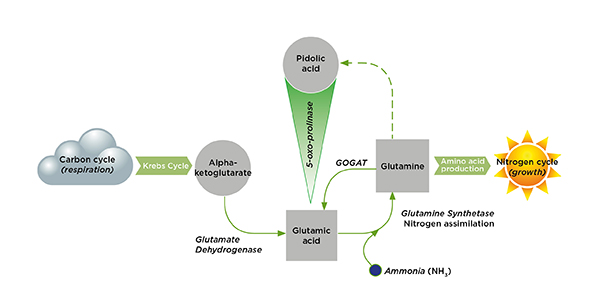
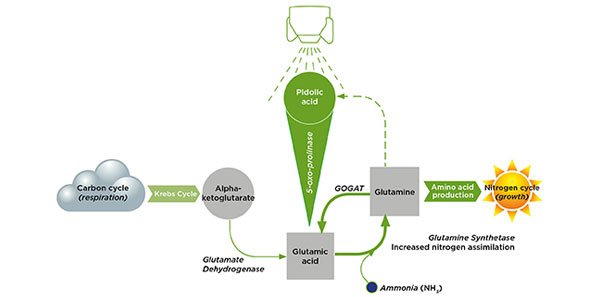
Pidolic acid is a signalling compound right at the heart of the nitrogen assimilation cycle.
During nitrogen assimilation, ammonia is used to form glutamine which is a building block in many amino acids. The process also feeds the Krebs/TCA cycle linked to respiration and energy generation within the plant.
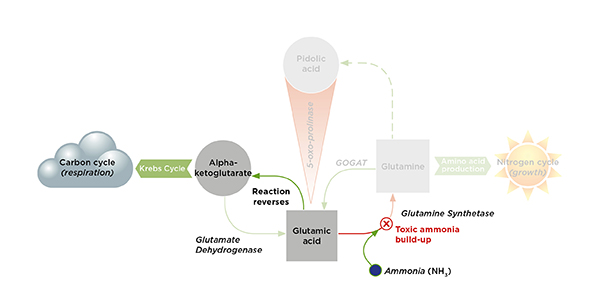
If pidolic acid applications are made to plants prior to or during stress, they allow the nitrogen assimilation cycle to continue. This limits the build-up of ammonia and permits the retention of more green leaf area.
Products containing pidolic acid include Incite, Nutrino Pro, RootMan Z, Status® and Talisman®.
R100®
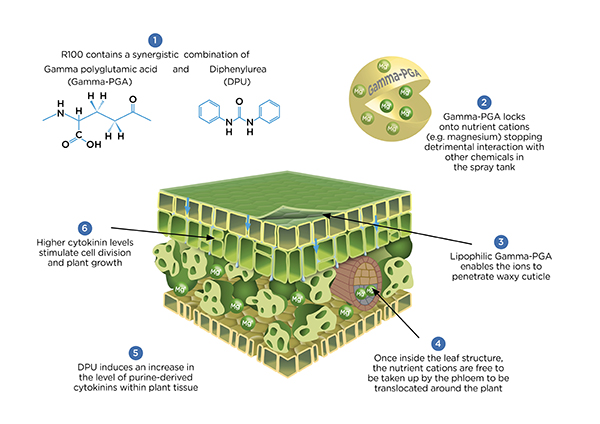
R100® is a patented nutrient uptake and phytohormone biosynthesis technology combining two diphenylurea (DPU) compounds and Gamma Polyglutamic Acid (Gamma-PGA). It increases the uptake and utilisation of cationic nutrients and stimulates cytokinin production. It also encourages magnesium assimilation, which is critical for photosynthesis.
Products containing R100 include Cearum, Magistrate R100, Nutrino Pro, RootMan Z and Talisman®.
Dimethyl Sulphone
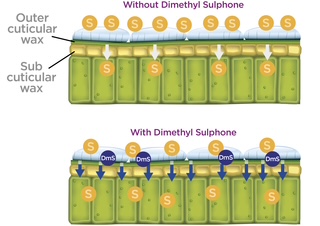
Dimethyl Sulphone is a plant biostimulant based around a sulphur atom which increases membrane permeability to aid the transport of available nutrients, in particular sulphur, through the plant cell wall from foliar applications.
Applications of Dimethyl Sulphone maintain and increase the concentration of nutrients within the crop, essential for the formation of enzymes needed for nitrogen uptake and protein synthesis, as well as improving the quality and taste of crops.
Dimethyl Sulphone contributes to maximising yield, enhancing nitrogen use efficiency and boosting the protein content percentage.
Products which contain Dimethyl Sulphone include Talisman®.
Phosphite
Phosphite triggers the production of cis-Zeatin that is responsible for inducing primary and lateral root growth. It also increases the activity of nitrate reductase.
Products containing phosphite include Incite, Prosper Plus and the seed treatment Prosper ST.
The use of phosphite encourages root development and shoot growth, improves nitrogen assimilation and supports higher yields.
Find out more about Phosphite’s impact on crop productivity.